Purpose and Happiness: A Comparison


Patrick E. McKnight1, Todd B. Kashdan1, Amie MacKay1, Kerry Kelso1, and Madeleine Gross2

1Department of Psychology, George Mason University

2Department of Psychology, University of California, Santa Barbara


Author Note

Patrick E. McKnight Orcid ID Logo: A green circle with white letters ID https://orcid.org/0000-0002-9067-9066

Todd B. Kashdan Orcid ID Logo: A green circle with white letters ID https://orcid.org/0000-0001-6438-0485

The data that support the findings of this study are available from the corresponding author, PEM, upon reasonable request. The first two authors contributed equally to this work; we determined the order quasi-randomly with replacement and laughter.

Correspondence concerning this article should be addressed to Patrick E. McKnight, Department of Psychology, George Mason University, Email: pmcknigh@gmu.edu


Abstract

Despite widespread assumptions among social scientists about the distinct nature of purpose in life and happiness, limited empirical studies have directly compared these constructs—particularly regarding their stability and their interrelationship over time. This research study addresses these omissions and provides a benchmark for evaluating the bivariate relationship between these important constructs in positive psychology. We used psychometrically sound assessments to measure these two constructs. Our findings were clear and reproducible; both purpose and happiness measures produce stable estimates over time and maintain a consistent, moderate correlation (rs > .43; p < .001). In longitudinal analyses, the causal direction favors happiness predicting subsequent ratings of purpose rather than the alternative (r \approx 0.15 vs. r \approx −0.04). We address the implications of these findings, provide researchers with guidance on improving the measurement of these fundamental dimensions of well-being, and suggest promising future research directions.

Keywords: purpose in life, happiness, well-being, stability, measurement


Purpose and Happiness: A Comparison

Happiness and purpose in life are central constructs in well-being models and empirical studies (e.g., Kern et al., 2015; Rottenberg & Kashdan, 2022; Ryff, 1995; VanderWeele, 2017; Walters, 2010). Each is characterized by a favorable subjective component, where a person’s thoughts and feelings tend to be more pleasant, or positively inclined above neutral (e.g., Kashdan et al., 2024; Vittersø, 2025) . Both are linked to a variety of healthy psychological, biological, and social outcomes (e.g., Choi et al., 2023; Pfund & Hill, 2018). Both are also widely recognized as primary factors that directly influence and shape our actions, decisions, and quality of life (e.g., E. S. Kim et al., 2019; Veenhoven, 2008). However, questions remain as to how these two constructs compare to each other. In this research program, we examined the psychometrics and stability of happiness and purpose over time. Specifically, we sought to understand the magnitude of their association and whether any changes over months and years occur independently of the other. This included whether happiness influences purpose, purpose influences happiness, or if there is evidence of bi-directionality. These issues cannot be explored with a cross-sectional study. As such, we collected data from four assessment periods over two years.

Defining Happiness and Purpose

In the most widely used model (Diener, 1984), happiness is referred to as subjective well-being (SWB) and defined by the presence of three elements: frequent positive emotional experiences, infrequent negative emotional experiences, and a cognitive judgment that life is highly satisfying (e.g., Busseri & Sadava, 2011; Jovanović et al., 2024; Vittersø, 2025). Although different models exist that vary in their treatment and conceptualization of these elements– for example, as components of a hierarchical construct, parts of a causal system, or a composite variable – the majority consider all three to be essential for understanding SWB as a whole (Busseri & Sadava, 2011).

Both classic and modern definitions of happiness converge on the notion that happiness is fundamentally a global evaluation of one’s life (e.g., Andrews & McKennell, 1980; Diener, 2006; Medvedev & Landhuis, 2018). Rather than merely tallying various factors like emotional states or life experiences, happiness relies on an intuitive, subjective evaluation of one’s overall life. This perspective aligns with a body of research indicating that even major life factors– such as socioeconomic or health status– have surprisingly limited effects on reported happiness (Sheldon & Lyubomirsky, 2007); a happy life, it seems, is greater than the sum of its parts. Indeed, happiness is sometimes conceptualized as an individual difference factor or trait, underscoring the high level of independence from many external influences; however, certain major life events do consistently alter happiness over the years (e.g., unemployment, personal health issues; (Lucas, 2007))

Since purpose has been explored as a psychological construct (Frankl, 1959), several definitions have emerged, of which four are frequently cited. First, Ryff (1989) stated that a person with a sense of purpose “has goals in life and a sense of directedness; feels there is meaning to present and past life; holds beliefs that give life purpose; has aims and objectives for living” (p. 45). Second, Damon et al. (2003) described purpose as “a stable and generalized intention to accomplish something that is at once meaningful to the self and of consequence to the world beyond the self” (p. 121). Third, Kosine and colleagues (2008) defined purpose as the “identification of highly valued, overarching goals, the attainment of which is anticipated to move people closer to achieving their true potential and bring them deep fulfillment’ (p. 133). Fourth, McKnight and Kashdan (2009b) considered purpose to be a”central, self-organizing life aim that organizes and stimulates goals, manages behaviors, and provides a sense of meaning” (p. 242).

Efforts to synthesize definitions identify three overlapping elements: centrality, goal-directedness, and commitment. Centrality refers to how purpose-related values, beliefs, and behaviors define a person’s sense of self and who they are becoming. Goal-directedness refers to actions aimed at future desired outcomes. Commitment entails the regular expenditure of resources (time, energy, finances, social capital) and decision-making concerning these desired outcomes. Prosocial intentions are another element that is often viewed as essential to purpose (e.g., Damon et al., 2003); however, it remains unclear if prosocial intentions are a feature or a common descriptor of particular types of purposes or particular individuals with a purpose (e.g., Hill et al., 2010; Kashdan et al., 2024). Indeed, a person can possess a strong purpose by simply holding a worldview and dedicating behaviors towards ends that matter greatly, which may or may not include caring for others.

Clear differences are apparent in current definitions of happiness and purpose. For happiness, the focus is on felt experiences and thoughts about one’s life (Vittersø, 2025). For purpose, the central focus is goal-setting and meaningful engagement with the world. These purpose features are excluded from quantifiable definitions of subjective (Diener et al., 2009) or objective (Kahneman et al., 1999) happiness. As such, while these constructs should be related– as they reflect pleasant states of being, thinking, and doing– happiness and purpose appear somewhat independent. The amount of relative independence is an empirical question.

Measurement of Happiness and Purpose

Precise, high-quality measurement is essential for advancing the understanding of happiness and purpose. To effectively capture the essence of dominant conceptual models, the present study employed the Subjective Happiness Scale (Lyubomirsky & Lepper, 1999) and the Brief Measure of Purpose in Life (Hill et al., 2016), two concise, targeted instruments for capturing happiness and purpose, respectively.

In alignment with theoretical models that define happiness as a global, subjective assessment of one’s life, the Subjective Happiness Scale (SHS) employs a single-factor approach that captures happiness from the individual’s perspective. Participants are given the freedom to interpret happiness on their terms, avoiding the artificial separation of emotional elements (hedonic happiness) from cognitive life assessments (eudaimonic happiness) that has limited previous research (for criticism on this distinction, (Coyne, 2013; see Kashdan et al., 2008). The brevity of the 4-item scale makes it suitable for longitudinal studies that involve repeated assessments over time, without the risk of imposing survey fatigue on participants. Since its development over 25 years ago, the SHS has been cited over 6,000 times and has demonstrated strong cross-cultural reliability and validity across different groups (e.g., Zager Kocjan et al., 2022), while also showing discriminant validity from other facets of well-being (e.g., Extremera et al., 2011; Yue et al., 2014). The widespread adoption of this scale allows findings from the current work to inform a large body of research on happiness.

The Brief Measure of Purpose in Life similarly provides a well-validated, short-form assessment of purpose that captures the core elements of purpose derived from both lay and expert definitions. The scale also maintains the brevity essential for longitudinal study designs. Scale items capture cognitive and motivational aspects of purpose, reflecting conceptual models of purpose as a clear awareness of what someone values and is working toward in their life (Kashdan et al., 2024; McKnight & Kashdan, 2009a). Like the SHS, the BMPIL has demonstrated excellent cross-cultural validity (e.g., Thalmayer et al., 2024) and has been used in large longitudinal investigations of well-being throughout the lifespan (e.g., Hill et al., 2019).

Gaps in the Literature

Despite extensive research on happiness and purpose in life, several gaps persist in the literature. Notably, too many studies are limited to the measurement of only one of these two constructs. If both happiness and purpose are measured, there is a scarcity of studies examining the relationship between these constructs over time and their sensitivity to change. Most existing research relies on cross-sectional designs, limiting the ability to conclude causality and the cross-lagged links between happiness and purpose. Additionally, while there is evidence for the adequate psychometric properties of the Subjective Happiness Scale and Brief Measure of Purpose in Life, their stability and responsiveness to change have not been thoroughly investigated. Addressing these gaps is crucial for building models of people across time and situations.

The Present Research

Building on prior work differentiating happiness and purpose (e.g., Ryff, 1989), we examined differences in temporal stability. Initially, we examined the psychometric properties for purpose and happiness to determine whether they are equivalent (i.e., in reliability, validity, and stability). If purpose and happiness differ in their psychometric properties, this would offer an alternative explanation for any study of causes, correlates, and consequences. With the inclusion of 6-month and 2-year follow-up surveys, our work allowed for tests of the shorter and longer-term patterns uniquely linked to happy and purposeful living. Using longitudinal data (i.e., cross-lagged analyses across assessment periods), we examined whether purpose causes or influences happiness, whether happiness causes or influences purpose, or if it is bi-directional.

Our goal was to explore the effectiveness of measuring happiness and purpose and their relation to each other over time. While we are interested in these two constructs, we offer this research program as a model for any constructs regularly discussed in tandem (such as the Big Five personality traits, the separability of depression and social anxiety, or guilt and shame). Before determining whether there are key differences between at least two psychological states or traits (e.g., Baumeister et al., 2013; Sheldon et al., 2015), it is essential to evaluate whether there are meaningful psychometric differences - because if one of the two is more reliable and stable, then any inference of causality from these correlational models becomes tenuous at best.

Methods

Participants and Procedure

We recruited a community sample of adults from the US mid-Atlantic region through local advertisements. The baseline sample (Time one; T1 n = 303) completed trait measures and ideographic assessments in the laboratory and subsequently completed follow-up measures six months later (Time two; T2 n = 205) and two years later (Time three; T3 n = 167) through an online survey platform. Sample sizes noted depend largely on the completeness of the data by individual and by time. Full demographics of the sample are available in . Simply put, our sample is best characterized as mostly well-educated (45\%), white (42\%) or Asian (18\%) women (59.4\%) in their early twenties to mid-thirties (M = 31.44; SD = 13.5) who were largely employed full-time (30\%), part-time (20\%) or students (19\%), with a median household income between US$20,000 and US$30,000. Note the median income is strongly weighted downward by the almost 40\% of the sample being unemployed, underemployed, and/or in debt. Regardless, the sample is representative of the region from which it was drawn.

Purpose

Brief Measure of Purpose in Life (BPIL) (Hill et al., 2016). The 4-item BPIL measures the degree to which one has a clear mission in life (e.g., “My plans for the future match with my true interests and values’’). Items are rated on a 5-point Likert scale (from 1 or not at all to 5 or very much). All scores were converted from the traditional 1-5 item scores and 4-20 total scores to POMP or percent of maximum possible scores (Cohen, Cohen, Aiken, & West, 2010); thus, the final scores range from 0 to 100. The BPIL demonstrates good construct validity through its positive associations with prior measures of purpose, hope, and positive affect. Prior research shows that the BPIL demonstrated adequate reliability (Hill et al., 2016).

Happiness

The 4-item Subjective Happiness Scale (SHS) (Lyubomirsky & Lepper, 1999) assesses global subjective happiness using a 7-point Likert scale with different anchors (1 or not a very happy person to 7 or a very happy person; 1 or less happy to 7 or more happy; 1 or not at all to 7 or a great deal) based on individual items (e.g., Some people are generally very happy. They enjoy life regardless of what is going on and get the most out of everything. To what extent does this characterization describe you?). All scores were converted from the traditional 1-7 item scores and 4-28 total scores to POMP or percent of maximum possible scores (Cohen et al., 2010); thus, the final scores range from 0 to 100. The SHS exhibits satisfactory convergent validity through its strong relationships with other happiness-related scales. Prior research shows that the SHS demonstrated adequate reliability (Lyubomirsky & Lepper, 1999).

Data Analytic Approach

Ultimately, we aimed to test the causal direction between purpose and happiness through a cross-lagged panel model. To ensure some level of interpretability for that model, we tested two critical assumptions: Assumption 1 - comparable psychometrics and Assumption 2 - factorial invariance. First, we provide basic descriptive statistics and classical test theory analyses to help us determine the extent to which the two measures were psychometrically comparable (Assumption 1). If both happiness and purpose were measured with relatively equivalent psychometric properties (here, reliability estimates), then we could compare correlations within and between administrations more readily and, largely without caveat. Second, we needed to ensure that the measurement models for both happiness and purpose were invariant over time - a term referred to as factorial invariance (Assumption 2). We used a multi-sample confirmatory factor analysis (CFA) to test for factorial invariance. The results helped us understand the nature of the scores produced by the factor models. Specifically, we hoped for scalar invariance because such a level ensures that scores captured over time were comparable. Thus, we could procede without hesitation to test the causal nature of purpose and happiness via the cross-lagged panel model (cf Duckworth et al., 2010). All data preparation, analysis, and reporting were performed using R Statistical Software (2025). We detail those results below.

Results

The results of our analyses are broken down into three distinct sections. First, we address the basic properties of the happiness and purpose measures, including their psychometric properties and stability over time. Second, we present the results of a multisample confirmatory factor analysis (CFA) to determine whether the two constructs - happiness and purpose - were both stable measurement models. This second section focuses largely on comparing the constructs within each time period but also over time. We deliberately focused on the contemporaneous measures here to ensure that the constructs were stable and reliable over time. Finally, we expanded the model after testing the cross-lagged panel design with both xxx and yyy analytic procedures. This final section is the most critical as it helps us determine the causal direction between happiness and purpose.

Assumption 1: Comparable Psychometric Properties

The two measures demonstrated equivalent reliability estimates within and between administrations (see ). Individually, the measures demonstrated high internal consistency and no serious problems with respect to ill-fitting items. The weighted mean alpha for each measure were both remarkably similar and stable for both (\bar{\alpha}_{happiness} = 0.881 for happiness and \bar{\alpha}_{purpose} = 0.872 for purpose. With little change in reliability within or between measure, we concluded that differential reliability between measures could be safely ruled out in the following models. Thus, we passed an essential test to be able to interpret causality of the assumption regarding cross-panel models is that the measures being compared are relatively equivalent in their reliability (Rogosa, 1980). Additionally, we need to establish that the measurement models are relatively invariant over time - another assumption that we directly address in the next model.

Assumption 2: Do The Factors Show Evidence of Factorial Invariance?

To assess the stability of the measurement models for both purpose and happiness, we used contemporary measurement invariance tests (Vandenberg & Lance, 2000). We conducted a multisample confirmatory factor analysis (CFA) to determine whether the measurement models for happiness and purpose were stable across timepoints (i.e., baseline, follow-up 1 (6 months), and follow-up 2 (2 years)). The tests required increasingly stringent constraints to test for configural, metric, and scalar invariance. Configural invariance tests whether the same items load onto the same factors across timepoints. Metric invariance tests whether the factor loadings are equivalent across timepoints. Finally, scalar invariance tests whether the factor loadings and intercepts are equivalent across timepoints. Our hope is always to find evidence for scalar invariance since that level of invariance allows us to have direct comparisons within and between constructs. We found that scalar invariance - the most constrained and useful model result - fit best . Specifically, we chose the model that fit well (CFI > 0.95 & RMSEA < 0.05), and lowest BIC of the three models. The Scalar invariance model met all of those criteria and, as a result, offered us the most defensible measurement model (see and for model fit comparisons between the invariance constraints and the standardized coefficients by administration, respectively). The implications of these results are that the measures are suitable to analyze in a temporal, causal model without great concern about differential reliability and validity. The details of these results can be best seen in .

Primary Question: What is the Temporal Relationship between Happiness and Purpose?

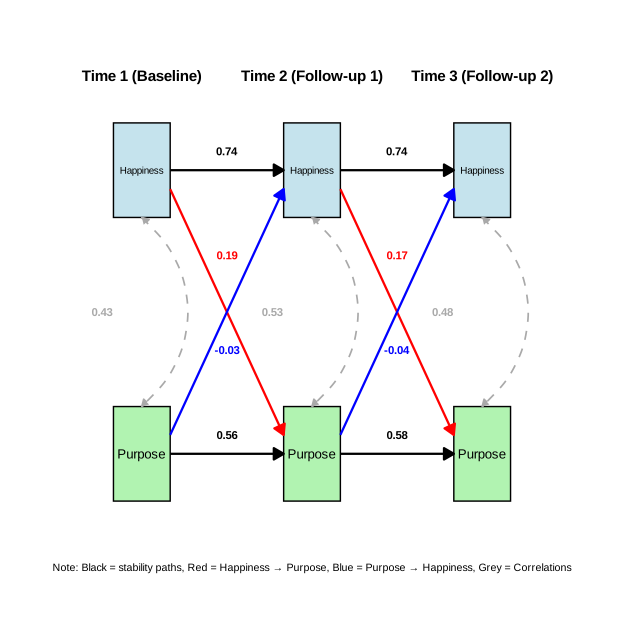
Three administrations of two measures allowed us to test the temporal relationship between happiness and purpose. These cross-lagged relationships account for the correlations both within measure over time and between measures within the same time period. Thus, these estimates are conservative with respect to the “true” or perhaps population parameter. Regardless, these estimates may be compared directly and without great concern for any psychometric differences as discussed previously. Further, we restricted our analyses to the computed POMP scores at each time point rather than estimating the factor scores from a full, latent variable model. Our rationale for such a restriction was simple; we wanted the greatest generalizability of our findings. Other researchers are likely to compute these scores as we have here and, as a result, our findings will be readily useful to other researchers as benchmarks in future work. Using a structural equations modeling approach, we modeled the relationship between purpose and happiness. The model enabled us to account for the autocorrelation within measure, over time. Our overall model fit well (see ) and met the standard criteria for evaluating these types of latent variable models as stated previously. The results of the model are shown in and suggest that the relationship between happiness and purpose is directional - not bidirectional as we had long assumed (see for details). That is, happiness at one time point predicts purpose at the next time point but not vice versa.

Discussion

This investigation evaluated the distinctive qualities of happiness and purpose in life. Despite several empirical studies on one of these two dimensions of well-being, few empirical studies directly contrast the two. Even those that do are limited by the inadequacy of cross-sectional research (e.g., Baumeister et al., 2013). Cross-sectional designs cannot answer questions about the impact of happiness and purpose on each other. By following the same people over multiple occasions, data are available to explore how happiness and purpose change and whether these changes occur independently.

Using baseline and 6-month and 2-year follow-up surveys, we found that scores on happiness and purpose remain moderately stable. In conjunction with the strong short- and moderate-term stability of these measures, our confidence is increased that these measures index constructs that have continuity over people’s lives. At the same time, the longitudinal stability of these measures indicated that considerable unexplained variance remained, suggesting that happiness and purpose are potentially sensitive to life events (e.g., McKnight & Kashdan, 2009a; Sheldon & Lyubomirsky, 2007).

Prior meta-analyses of test–retest studies suggest that 1-year test-retest coefficients for happiness ranged from .55 to .75 when multi-item measures were used, with an expected value of around .65 (Schimmack & Oishi, 2005). These prior estimates imply that the current estimates of happiness stability are higher than prior findings. One possible explanation is the use of a community sample of adults - as opposed to emerging adults (in late adolescents and the early 20s) (Arnett, 2007; Arnett et al., 2014), as people get older, there is a tendency to find greater fulfillment of basic needs for belonging, competence, and autonomy (Buijs et al., 2021). Upon moving beyond emerging adulthood, people are prone to securing a career, home, romantic partner, friends, and a set of habits and hobbies. As such, there is greater emotional, cognitive, financial, and social stability. The stability of happiness might better reflect the life stage of the people under study than the construct itself (e.g., Blanchflower et al., 2023). Surprisingly, little research exists on how the attainment and pursuit of purpose changes across the lifespan and remains an area of needed inquiry.

How do the stability coefficients found in the present study compare to other measures? Research on personality and intelligence provides a comparison. One meta-analysis of the Big Five personality traits (i.e., extraversion, neuroticism, openness, agreeableness, and conscientiousness) found that 1-year test-retest coefficients ranged from .48 (agreeableness) to .59 (extraversion) (Bazana & Stelmack, 2004). Research directly comparing the stability of life satisfaction to other individual differences found Big Five personality traits (Fujita & Diener, 2005) to be more stable over the years. Thus, compared to personality traits, happiness appears more variable and perhaps, malleable. Once again, direct comparisons between the stability of purpose across the lifespan and other individual differences remain an area of needed inquiry.

The second intent of this study was to assess the specificity of these measures in predicting scores over time. In support of specificity, greater happiness predicted the subsequent development of purpose with no evidence for the alternative direction. Although purpose and happiness are related to differing degrees, the evidence for causal specificity supports the value of exploring these constructs as two related but separable dimensions of well-being. To some degree, this is due to the measurement approaches.

Feeling happy offers an opportunity to redirect attention toward opportunities to take risks and grow as a person. Evidence for this stems from work suggesting that a sense of security increases exploratory behavior (Haase et al., 2012; Mikulincer, 1997). What better way to do so than to devote time and energy toward one’s ultimate concern - a purpose in life. Pursuing a purpose, however, often detracts from happiness. The reason is that people are motivated to make sacrifices and trade-offs - resisting tempting rewards today for a more gratifying, meaningful existence (e.g., Holding et al., 2020). When a purpose exists, obstacles and setbacks are inevitable. Attempting to work through goal-related obstacles can motivate goal pursuit (Thorsteinsen & Vittersø, 2018; Zhang & Fishbach, 2010) but often at the expense of momentary and moderate to long-term happiness (Kashdan & Goodman, 2023; Ratner & Burrow, 2021). As such, it is unsurprising that across months and years, purpose is an inconsistent predictor of happiness whereas being happy offers a stable, secure foundation to initiate and pursue purpose. Future work can move from a variable-centric approach to a person-centric approach (Kashdan & McKnight, 2011). There may be predictable subgroups of people with a profile where purpose regularly induces happiness. Such a relationship might depend on the content of a purpose; right now, we do not know. We do know that relationships are known to be a highly regarded source of purpose in people’s lives (e.g., Baumsteiger et al., 2022). Since acts of kindness are a reliable predictor of greater happiness (Curry et al., 2018; Rowland & Curry, 2019), the degree to which a purpose is focused on other people is likely to introduce greater happiness into someone’s life.

Our findings should be interpreted in the context of several limitations. First, this research was conducted using a community sample; while sufficiently large, the sampling domain might not generalize to the broader population. Adults from the mid-Atlantic area in the US might be more likely to experience change and transition given the transitory nature of the population. Likewise, research with more diverse samples might reveal important differences in how purpose and happiness interact over time. For example, there is evidence that searching for and identifying a purpose is linked to happiness in adolescents but not emerging adults (e.g., Cotton Bronk et al., 2009) and evidence that developing and benefiting from a purpose is harder for people who are in the minority or marginalized (Sumner et al., 2018).

Second, the response rate for the multiple waves of assessments over months and years could have been higher. However, given that participants were not offered substantial incentives to complete the measures one to two years after their initial consent, and the increasing rate of residential mobility in adults, this level of participation seems reasonable. Nonetheless, we analyzed the data as if missing values were a concern using full-information, maximum likelihood estimation or FIML. These types of statistical adjustments do not correct for biases but we can rest somewhat assured that these missingness had little influence on the measurement model. We found that quite surprising that the correlation patterns remained so stable. Finally, there were no significant predictors of missing data nor were the results greatly affected by using FIML as our missing data handling procedure.

Conclusion

Psychologists are increasingly focused on understanding factors that contribute to enduring well-being. Measures of purpose in life and happiness are valuable tools for assessing the nature of well-being in basic research and the effectiveness of interventions aimed at enhancing well-being in applied work. Our research provides new insights into the stability and interplay of happiness and purpose over time. We found that happiness remains relatively stable and serves as a predictor of future happiness over intervals of 6 months, 1 year, and 2 years. In contrast, purpose in life appears more variable and does not predict future happiness across these timeframes.​

As these measurement tools become more refined, it is essential to evaluate sensitivity to change, particularly within intervention contexts such as therapy with clinical populations. Establishing the responsiveness of purpose and happiness measures will enhance our ability to assess and promote well-being effectively. Future research should prioritize this evaluation to deepen our understanding of how individuals can lead fulfilling lives and realize their potential.

References

Aghababaei, N., & Błachnio, A. (2014). Does purpose in life predict subjective happiness - the mediating role of basic psychological needs. Journal of Happiness Studies, 15(3), 459–474.
Andrews, F. M., & McKennell, A. C. (1980). Measures of self-reported well-being: Their affective, cognitive, and other components. Social Indicators Research, 8, 127–155.
Arnett, J. J. (2007). Emerging adulthood: What is it, and what is it good for? Child Development Perspectives, 1(2), 68–73.
Arnett, J. J., Žukauskienė, R., & Sugimura, K. (2014). The new life stage of emerging adulthood at ages 18–29 years: Implications for mental health. The Lancet Psychiatry, 1(7), 569–576.
Baumeister, R. F., Vohs, K. D., Aaker, J. L., & Garbinsky, E. N. (2013). Some key differences between a happy life and a meaningful life. Journal of Positive Psychology, 8, 505–516.
Baumsteiger, R., Riches, B., Mangan, S. A., McConchie, J., & Bronk, K. C. (2022). WHAT’s YOUR "WHY?" a content analysis of youth purpose. Journal of Character Education, 18(1), 1–14.
Bazana, P. G., & Stelmack, R. M. (2004). First-and second-order factor structure of five scales of the NEO personality inventory-revised. Personality and Individual Differences, 36(7), 1567–1577.
Blanchflower, D. G., Graham, C., & Piper, A. (2023). Happiness and age—resolving the debate. National Institute Economic Review, 263, 76–93.
Buijs, V. L., Jeronimus, B. F., Lodder, G. M., Steverink, N., & Jonge, P. de. (2021). Social needs and happiness: A life course perspective. Journal of Happiness Studies, 22(4), 1953–1978.
Busseri, M. A., & Sadava, S. W. (2011). A review of the tripartite structure of subjective well-being: Implications for conceptualization, operationalization, analysis, and synthesis. Personality and Social Psychology Review, 15(3), 290–314.
Chen, C.-T., & Cheng, Y.-Y. (2020). The role of hope and grit in life satisfaction and school adjustment among second-chance alternative school students in taiwan. International Journal of Environmental Research and Public Health, 17(3), 889.
Choi, H., Diener, E., Sim, J. H., & Oishi, S. (2023). Happiness is associated with successful living across cultures. The Journal of Positive Psychology, 18(6), 958–977.
Cohen, P., Cohen, J., Aiken, L. S., & West, S. G. (2010). Best practices in quantitative methods for developmentalists. Monographs of the Society for Research in Child Development, 75(1), 1–217.
Cotton Bronk, K., Hill, P. L., Lapsley, D. K., Talib, T. L., & Finch, H. (2009). Purpose, hope, and life satisfaction in three age groups. The Journal of Positive Psychology, 4(6), 500–510.
Coyne, J. C. (2013). Highly correlated hedonic and eudaimonic well-being thwart genomic analysis. Proceedings of the National Academy of Sciences, 110(45), E4183–E4183.
Crego, A., Yela, J. R., Gómez-Martínez, M. A., & Karim, A. A. M. (2021). Meaning in life among adolescents: Factorial invariance of the purpose in life test and associations with personality traits and schemas. Journal of Happiness Studies, 22, 1359–1377.
Curry, O. S., Rowland, L. A., Van Lissa, C. J., Zlotowitz, S., McAlaney, J., & Whitehouse, H. (2018). Happy to help? A systematic review and meta-analysis of the effects of performing acts of kindness on the well-being of the actor. Journal of Experimental Social Psychology, 76, 320–329.
Damon, W., Menon, J., & Cotton Bronk, K. (2003). The development of purpose during adolescence. Applied Developmental Science, 7(3), 119–128.
Diener, E. (1984). Subjective well-being. Psychological Bulletin, 95(3), 542.
Diener, E. (2006). Guidelines for national indicators of subjective well-being and ill-being. Applied Research in Quality of Life, 1(2), 151–157.
Diener, E., Lucas, R. E., Schimmack, U., & Helliwell, J. F. (2009). Prosperity, happiness, and public policy. Happiness Is the Measure of True Wealth.
Disabato, D., Goodman, F., & Kashdan, T. B. (2025). The experience of personally valued fulfillment within one’s life. Psychological Review.
Duckworth, A. L., Tsukayama, E., & May, H. (2010). Establishing causality using longitudinal hierarchical linear modeling: An illustration predicting achievement from self-control. Social Psychological and Personality Science, 1(4), 311–317.
Extremera, N., Salguero, J. M., & Fernández-Berrocal, P. (2011). Trait meta-mood and subjective happiness: A 7-week prospective study. Journal of Happiness Studies, 12(3), 509–517.
Fogelman, N., & Canli, T. (2015). The role of purpose in life in the relationship between cortisol and subjective well-being. Psychosomatic Medicine, 77(5), 508–516.
Frankl, V. E. (1959). Man’s search for meaning. Beacon Press.
Fujita, F., & Diener, E. (2005). The set point theory of well-being has serious flaws: On the eve of a scientific revolution? Psychological Inquiry, 16(2-3), 161–165.
Haase, C. M., Poulin, M. J., & Heckhausen, J. (2012). Happiness as a motivator: Positive affect predicts primary control striving for career and educational goals. Personality and Social Psychology Bulletin, 38(8), 1093–1104.
Hill, P. L., Beatty, A. L., & Wolk, D. A. (2024). Beating the odds: Purpose in life protects against dementia among individuals with high genetic risk. Psychological Science.
Hill, P. L., Burrow, A. L., O’Dell, A. C., & Thornton, M. A. (2010). A sense of calling: Finding meaning in generative concerns. International Journal of Developmental Science, 4(1), 1–8.
Hill, P. L., Edmonds, G. W., Peterson, M., Luyckx, K., & Andrews, J. A. (2016). Assessing the validity of abbreviated versions of the intentions to help others scale. European Journal of Psychological Assessment.
Hill, P. L., Schultz, L. H., Jackson, J. J., & Andrews, J. A. (2019). Parent-child conflict during elementary school as a longitudinal predictor of sense of purpose in emerging adulthood. Journal of Youth and Adolescence, 48, 145–153.
Hill, P. L., Sin, N. L., Turiano, N. A., Burrow, A. L., & Almeida, D. M. (2018). Sense of purpose in life and five health behaviors in older adults. Preventive Medicine, 107, 63–68.
Holding, A. C., St-Jacques, A., Verner-Filion, J., Kachanoff, F., & Koestner, R. (2020). Sacrifice—but at what price? A longitudinal study of young adults’ sacrifice of basic psychological needs in pursuit of career goals. Motivation and Emotion, 44, 99–115.
Iasiello, M., Bartholomaeus, J., Jarden, A., Kelly, G., & Agteren, J. van. (2024). A map of positive mental health instruments and their 410 dimensions. Journal of Personality Assessment, 1–15.
Jovanović, V., Rudnev, M., Aryanto, C. B., Balgiu, B. A., Caudek, C., Datu, J. A. D., et al. (2024). A cross-cultural evaluation of diener’s tripartite model of subjective well-being across 16 countries. Journal of Happiness Studies, 25(6), 82.
Kahneman, D., Diener, E., & Schwarz, N. (1999). Well-being: Foundations of hedonic psychology. Russell Sage Foundation.
Kashdan, T. B., Biswas-Diener, R., & King, L. A. (2008). Reconsidering happiness: The costs of distinguishing between hedonics and eudaimonia. The Journal of Positive Psychology, 3(4), 219–233.
Kashdan, T. B., & Goodman, F. R. (2023). A unified approach to managing emotions and pursuing purpose in life. Cognition and Emotion, 37(3), 371–377.
Kashdan, T. B., Goodman, F. R., McKnight, P. E., Brown, B., & Rum, R. (2024). Purpose in life: A resolution on the definition, conceptual model, and optimal measurement. American Psychologist, 79(6), 838–853.
Kashdan, T. B., & McKnight, P. E. (2011). Dynamic, contextual approaches to studying personality in the social world. Journal of Personality, 79(6), 1177–1190.
Kern, M. L., Waters, L. E., Adler, A., & White, M. A. (2015). A multidimensional approach to measuring well-being in students: Application of the PERMA framework. The Journal of Positive Psychology, 10(3), 262–271.
Kim, E. S., Delaney, S. W., & Kubzansky, L. D. (2019). Sense of purpose in life and cardiovascular disease: Underlying mechanisms and future directions. Current Cardiology Reports, 21, 1–11.
Kim, J., Kim, H., & Jeon, D. (2017). Associations between meaning in life, psychological well-being, and life satisfaction. The Korean Journal of Psychology: General, 36(3), 325–344.
Kosine, N. R., Steger, M. F., & Duncan, S. (2008). Purpose-centered career development: A strengths-based approach to finding meaning and purpose in careers. Professional School Counseling, 12(2), 133–136.
Lucas, R. E. (2007). Adaptation and the set-point model of subjective well-being: Does happiness change after major life events? Current Directions in Psychological Science, 16(2), 75–79.
Lyubomirsky, S., & Lepper, H. S. (1999). A measure of subjective happiness: Preliminary reliability and construct validation. Social Indicators Research, 46, 137–155.
McKnight, P. E., & Kashdan, T. B. (2009b). Purpose in life as a system that creates and sustains health and well-being: An integrative, testable theory. Review of General Psychology, 13(3), 242–251.
McKnight, P. E., & Kashdan, T. B. (2009a). Purpose in life as a system that creates and sustains health and well-being: An integrative, testable theory. Review of General Psychology, 13(3), 242–251. https://doi.org/10.1037/a0017152
Medvedev, O. N., & Landhuis, C. E. (2018). Exploring constructs of well-being, happiness and quality of life. PeerJ, 6, e4903.
Mikulincer, M. (1997). Adult attachment style and information processing: Individual differences in curiosity and cognitive closure. Journal of Personality and Social Psychology, 72(5), 1217–1230.
Pfund, G. N., & Hill, P. L. (2018). The multifaceted benefits of purpose in life. The International Forum for Logotherapy, 41, 27–37.
R Core Team. (2025). R: A language and environment for statistical computing. https://www.R-project.org/
Ratner, K., & Burrow, A. L. (2021). Derailment within the landscape of psychopathology. Current Opinion in Psychology, 41, 21–27.
Robak, R. W., & Griffin, P. W. (2000). Purpose in life: What is its relationship to happiness, depression, and grieving? North American Journal of Psychology, 2(1), 113–120.
Rogosa, D. (1980). A critique of cross-lagged correlation. Psychological Bulletin, 88(2), 245.
Rottenberg, J., & Kashdan, T. B. (2022). Well-being after psychopathology: A transformational research agenda. Current Directions in Psychological Science, 31(3), 280–287.
Rowland, L., & Curry, O. S. (2019). A range of kindness activities boost happiness. The Journal of Social Psychology, 159(3), 340–343.
Ryff, C. D. (1989). Happiness is everything, or is it? Explorations on the meaning of psychological well-being. Journal of Personality and Social Psychology, 57(6), 1069.
Ryff, C. D. (1995). Psychological well-being in adult life. Current Directions in Psychological Science, 4(4), 99–104.
Schaefer, S. M., Boylan, J. M., Van Reekum, C. M., Lapate, R. C., Norris, C. J., Ryff, C. D., & Davidson, R. J. (2013). Purpose in life predicts better emotional recovery from negative stimuli. PloS One, 8(11), e80329.
Schimmack, U., & Oishi, S. (2005). The persistence of evaluative states: Psychological relevance and methodological issues. Annual Review of Psychology, 56(1), 103–124.
Sheldon, K. M., & Lyubomirsky, S. (2007). Is it possible to become happier?(and if so, how?). Social and Personality Psychology Compass, 1(1), 129–145.
Sheldon, K. M., Prentice, M., & Halusic, M. (2015). The experiential incompatibility of mindfulness and flow absorption. Social Psychological and Personality Science, 6(3), 276–283.
Sumner, R., Burrow, A. L., & Hill, P. L. (2018). The development of purpose in life among adolescents who experience marginalization: Potential opportunities and obstacles. American Psychologist, 73(6), 740–752.
Thalmayer, A. G., Asatsa, S., Shino, E. N., Naudé, L., Laher, S., Hassem, T., et al. (2024). Lifespan research in kenya, namibia, and south africa: Cohort profile of the africa long life study. Personality Science, 5, 27000710241264492.
Thorsteinsen, K., & Vittersø, J. (2018). Striving for wellbeing: The different roles of hedonia and eudaimonia in goal pursuit and goal achievement. International Journal of Wellbeing, 8(2).
Vandenberg, R. J., & Lance, C. E. (2000). A Review and Synthesis of the Measurement Invariance Literature: Suggestions, Practices, and Recommendations for Organizational Research. Organizational Research Methods, 3(1), 4–70. https://doi.org/10.1177/109442810031002
VanderWeele, T. J. (2017). On the promotion of human flourishing. Proceedings of the National Academy of Sciences, 114(31), 8148–8156.
Veenhoven, R. (2008). Healthy happiness: Effects of happiness on physical health and the consequences for preventive health care. Journal of Happiness Studies, 9, 449–469.
Vittersø, J. (2025). Happiness and wellbeing. In Humanistic wellbeing: Toward a value-based science of the good life (pp. 49–77). Springer Nature Switzerland.
Walters, K. (2010). Attentional biases in social anxiety: An investigation of rumination. Theses and Dissertations (Comprehensive). http://scholars.wlu.ca/etd/977
Yue, X. D., Liu, K. W., Jiang, F., & Hiranandani, N. A. (2014). Humor styles, self-esteem, and subjective happiness. Psychological Reports, 115(2), 517–525.
Zager Kocjan, G., Jose, P. E., Sočan, G., & Avsec, A. (2022). Measurement invariance of the subjective happiness scale across countries, gender, age, and time. Assessment, 29(4), 826–841.
Zhang, Y., & Fishbach, A. (2010). Counteracting obstacles with optimistic predictions. Journal of Experimental Psychology: General, 139(1), 16–31.

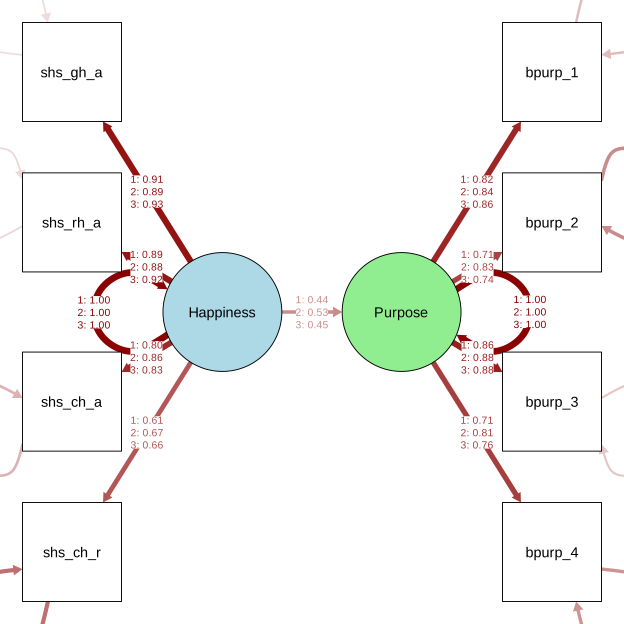
Table 1

Table 1. Demographic Characteristics (N = 345)

Variable Category Value
Age M = 31.44 (SD = 13.50), Range: 18-81
Sex Man 102 (29.6%)
Woman 205 (59.4%)
Other (please specify) 3 (0.9%)
Race/Ethnicity White / Caucasian 146 (42.3%)
Black / African-American 44 (12.8%)
Latino / Hispanic 26 (7.5%)
Asian / Pacific Islander 62 (18.0%)
Arab / Middle-eastern 11 (3.2%)
Other (please specify) 21 (6.1%)
Education Some high school 1 (0.3%)
High school graduate 46 (13.3%)
Trade/Technical/Vocational school graduate 3 (0.9%)
Some College/University 62 (18.0%)
2-year College/University graduate (i.e., associate's degree) 22 (6.4%)
4-year College/University graduate (i.e., bachelor's degree) 85 (24.6%)
Some graduate/professional school (e.g., Master’s school; Medical school) 21 (6.1%)
Graduate school/professional degree (e.g., Master’s degree; Medical degree) 70 (20.3%)
Employment Status Not employed 26 (7.5%)
Part-time (29- hours a week) 69 (20.0%)
Full time (30+ hours a week) 101 (29.3%)
Homemaker/volunteer 8 (2.3%)
Student (full-time) 66 (19.1%)
Retired 13 (3.8%)
Other (please specify) 27 (7.8%)
Occupation Management, professional, related 100 (29.0%)
Service 84 (24.3%)
Sales and office 31 (9.0%)
Farming, fishing, and forestry 3 (0.9%)
Construction, extraction, and maintenance 4 (1.2%)
Production, transportation, and material moving 3 (0.9%)
Government 20 (5.8%)
I do not have a job 60 (17.4%)
Annual Household Income Less than $10,000 100 (29.0%)
$10,001 - $20,000 39 (11.3%)
$20,001 - $30,000 22 (6.4%)
$30,001 - $40,000 18 (5.2%)
$40,001 - $50,000 19 (5.5%)
$50,001 - $60,000 21 (6.1%)
$60,001 - $70,000 9 (2.6%)
$70,001 - $80,000 16 (4.6%)
$80,001 - $90,000 14 (4.1%)
$90,001 - $100,000 3 (0.9%)
$100,001 - $150,000 28 (8.1%)
$150,001 - $200,000 11 (3.2%)
More than $200,000 10 (2.9%)

Table 2

Psychometric Properties of Happiness and Purpose Measures Across Timepoints (POMP Scores)

Timepoint N Mean SD Min Max Cronbach's α
Happiness
Baseline 328 61.94 22.44 0.00 100.00 0.874
Follow-up 1 200 62.69 23.42 0.00 100.00 0.887
Follow-up 2 119 60.15 23.54 0.00 95.83 0.889
Purpose
Baseline 314 67.71 22.32 0.00 100.00 0.844
Follow-up 1 197 69.04 21.20 0.00 100.00 0.904
Follow-up 2 119 68.22 22.66 0.00 100.00 0.884

Table 3

Model Fit Comparison Across Invariance Levels

Model Fit Comparison Across Invariance Levels
Model ChiSq df CFI RMSEA SRMR BIC
Configural 68.55 57 0.995 0.031 0.029 14482
Metric 84.76 69 0.993 0.033 0.044 14423
Scalar 106.61 81 0.989 0.038 0.047 14368

Table 4

Model Differences Across Invariance Levels

Model Differences Across Invariance Levels
Comparison dCFI dRMSEA dBIC
Metric vs. Configural -0.0018764 0.0018994 -59.56261
Scalar vs. Metric -0.0043836 0.0057456 -54.95428

Table 5

Standardized Factor Loadings (estimate (SE))

Baseline Follow-Up 1 Follow-Up 2
Happiness =~ shs_gh_a 0.906 (0.013) 0.887 (0.022) 0.928 (0.018)
Happiness =~ shs_rh_a 0.888 (0.017) 0.876 (0.022) 0.918 (0.026)
Happiness =~ shs_ch_a 0.799 (0.026) 0.862 (0.022) 0.834 (0.030)
Happiness =~ shs_ch_r 0.613 (0.036) 0.669 (0.042) 0.664 (0.047)
Purpose =~ bpurp_1 0.816 (0.027) 0.838 (0.034) 0.856 (0.030)
Purpose =~ bpurp_2 0.712 (0.034) 0.825 (0.031) 0.738 (0.055)
Purpose =~ bpurp_3 0.856 (0.024) 0.877 (0.025) 0.883 (0.032)
Purpose =~ bpurp_4 0.706 (0.032) 0.805 (0.032) 0.758 (0.045)

Table 6

Factor Correlation (estimate (SE))

Factor Correlation (estimate (SE))
param_label est_se
Happiness ~~ Purpose 0.438 (0.055)
Happiness ~~ Purpose 0.529 (0.063)
Happiness ~~ Purpose 0.449 (0.089)

Table 7

Standardized Correlations Between Purpose and Happiness (POMP Scores)

Model Fit Indices
Index Value
chisq 427.841
df 237.000
pvalue 0.000
cfi 0.947
tli 0.938
rmsea 0.049
srmr 0.057
aic 42644.566
bic 42975.087
a Note. cfi = Comparative Fit Index; tli = Tucker-Lewis Index; rmsea = Root Mean Square Error of Approximation; srmr = Standardized Root Mean Square Residual; aic = Akaike Information Criterion; bic = Bayesian Information Criterion

Table 8

Cross-Lagged Panel Model Path Coefficients

Path Type Path Coefficient Standardized p-value
Auto-regressive Paths
Auto-regressive Happiness (T1→T2) 0.783 0.740 < .001 ***
Auto-regressive Happiness (T2→T3) 0.718 0.742 < .001 ***
Auto-regressive Purpose (T1→T2) 0.544 0.556 < .001 ***
Auto-regressive Purpose (T2→T3) 0.609 0.582 < .001 ***
Cross-lagged Paths
Cross-lagged Happiness→Purpose (T1→T2) 0.168 0.185 0.002 **
Cross-lagged Happiness→Purpose (T2→T3) 0.149 0.165 0.028 *
Cross-lagged Purpose→Happiness (T1→T2) -0.039 -0.035 0.527
Cross-lagged Purpose→Happiness (T2→T3) -0.049 -0.043 0.558
Indirect Effects
Indirect Effect Purpose→Happiness→Purpose 0.064 0.199
Indirect Effect Happiness→Purpose→Happiness -0.043 0.558

Figure 1

Factorial Invariance Tests for Happiness and Purpose Measures Across Timepoints

Figure 2

Cross-Lagged Panel Model of Purpose and Happiness with Standardized Path Coefficients